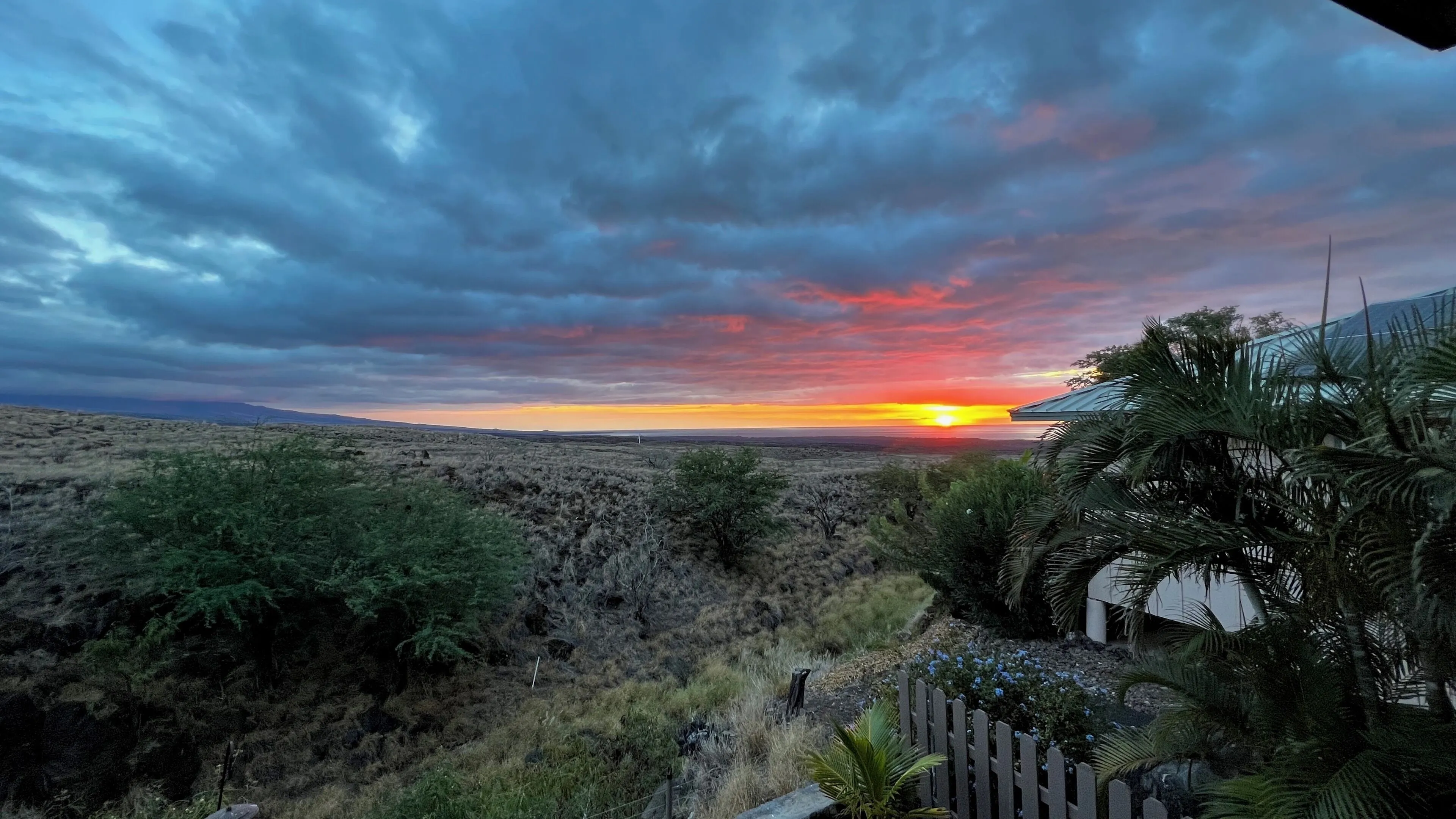
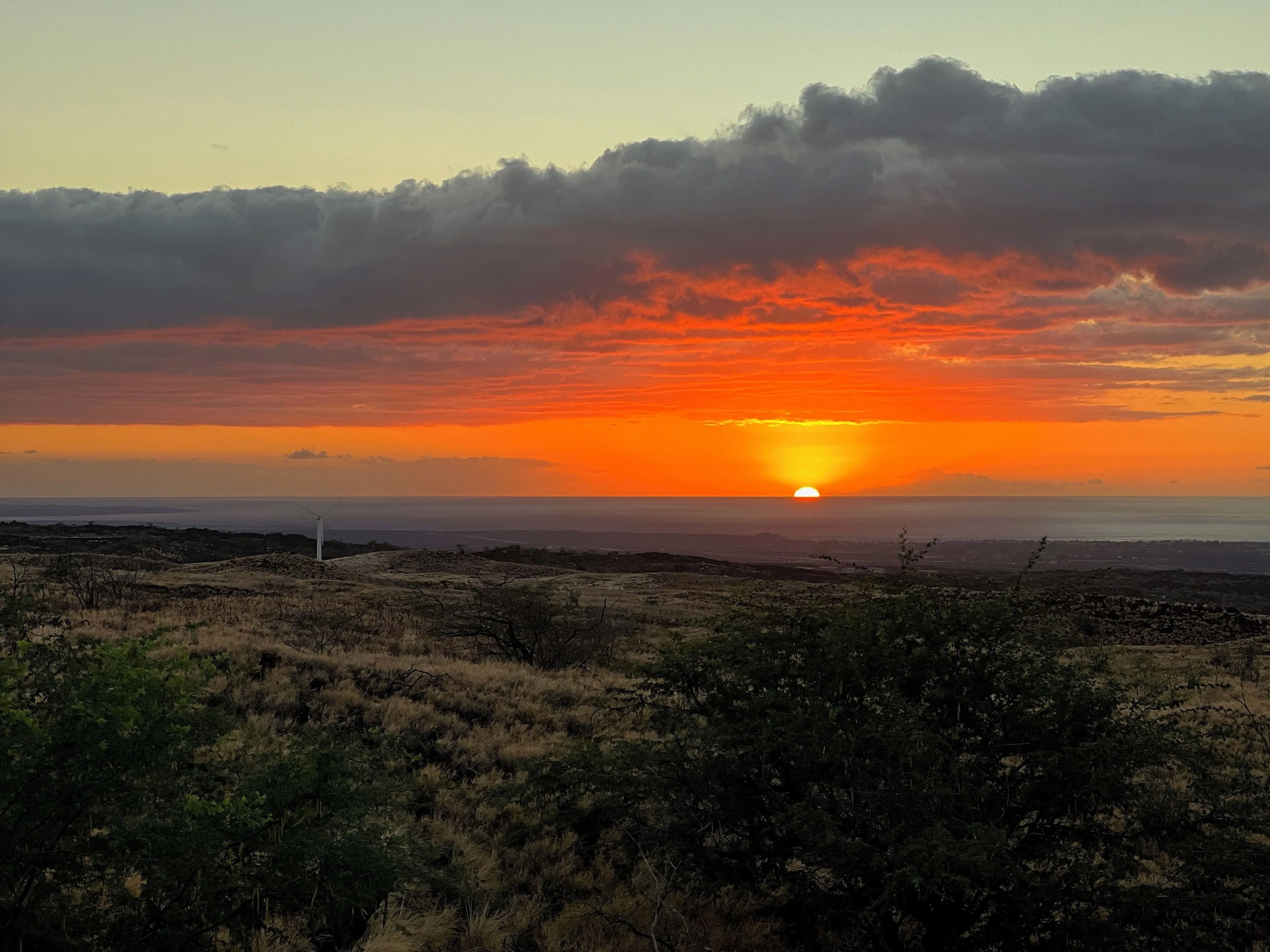
Tropical Storm Lala hit the Big Island's windward side in August 2026 — here's why the leeward Kohala Coast was spared the worst, and how our Waikoloa home came through undamaged.
If you're planning a stay with us and you've seen the news about Tropical Storm Lala, you almost certainly have one question on your mind: is the Big Island okay, and is our home okay? We want to answer that honestly and completely, because it's exactly what we'd want to know if we were the ones planning a trip.
Lala reached Hawaiʻi Island in mid-August 2026, its center passing the island's southern point on the evening of August 15 before weakening from a hurricane to a tropical storm and spinning back out to sea. It was a serious storm. The heaviest damage fell on the windward, eastern side of the island — the Puna and Hilo districts — where torrential rain pushed rivers over their banks (the Wailuku River in Hilo rose from roughly three feet to sixteen in a matter of hours), swept away homes, and, tragically, took one life. Our hearts are with those communities, and recovery there is still underway.
Here's the geography that matters for anyone planning a stay on our side of the island. Hawaiʻi Island is really two climates separated by its enormous volcanoes. The windward east catches the moisture-laden trade winds and the heavy rain that rides in with them — Hilo is one of the wettest cities in the United States. The leeward west, where Waikoloa Village sits, lies in the rain shadow of Mauna Kea and Hualālai and stays dry and sunny most of the year. That same geography that gives the Kohala Coast its famous sunshine also shelters it from the worst of storms that track in from the east. We felt Lala's winds up here, and the higher elevations of the Kohala mountains saw strong gusts, but our side was spared the catastrophic flooding that struck the windward districts.
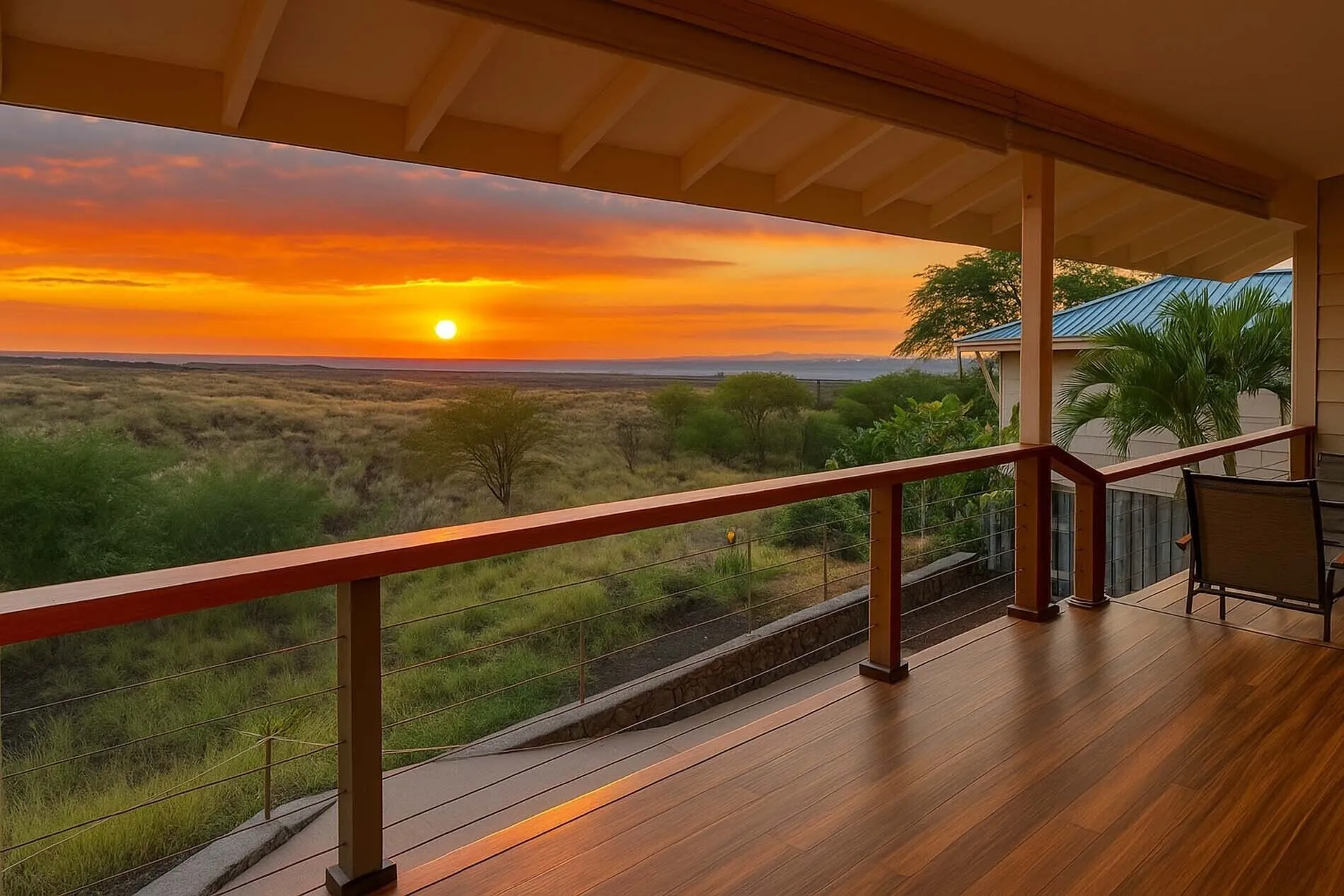
We're glad to report that our home came through Lala without damage. The house, the covered lanai, and the grounds are all in good shape, and Waikoloa Village as a community weathered the storm well. Kona International Airport — your gateway to this side of the island — closed briefly during the storm and reopened on August 17, and flights are operating normally again. In short, the west side is open, running, and welcoming guests.
No one can promise that a Pacific island will never see a storm — hurricane season here runs roughly June through November, and part of being a good host is being straight with you about that. What we can tell you is that the Kohala Coast's dry, leeward position makes it one of the more sheltered corners of the island, that our home is sound, and that a month-long stay gives you the flexibility to plan around weather in a way a short trip never can. If a system ever did approach during your stay, we'd be in close contact and make sure you had the information and support you needed.
If you'd like to talk through timing, weather, or anything else on your mind as you plan, we'd genuinely welcome the conversation.
Hale Akaʻula is our whole-home rental in Waikoloa Village, on the dry and sunny Kohala Coast, and we rent by the month with direct booking and no platform fees. Take a look at our photo gallery, review our monthly rates, and reach out any time through our reservations page or contact page — we're happy to answer every question.