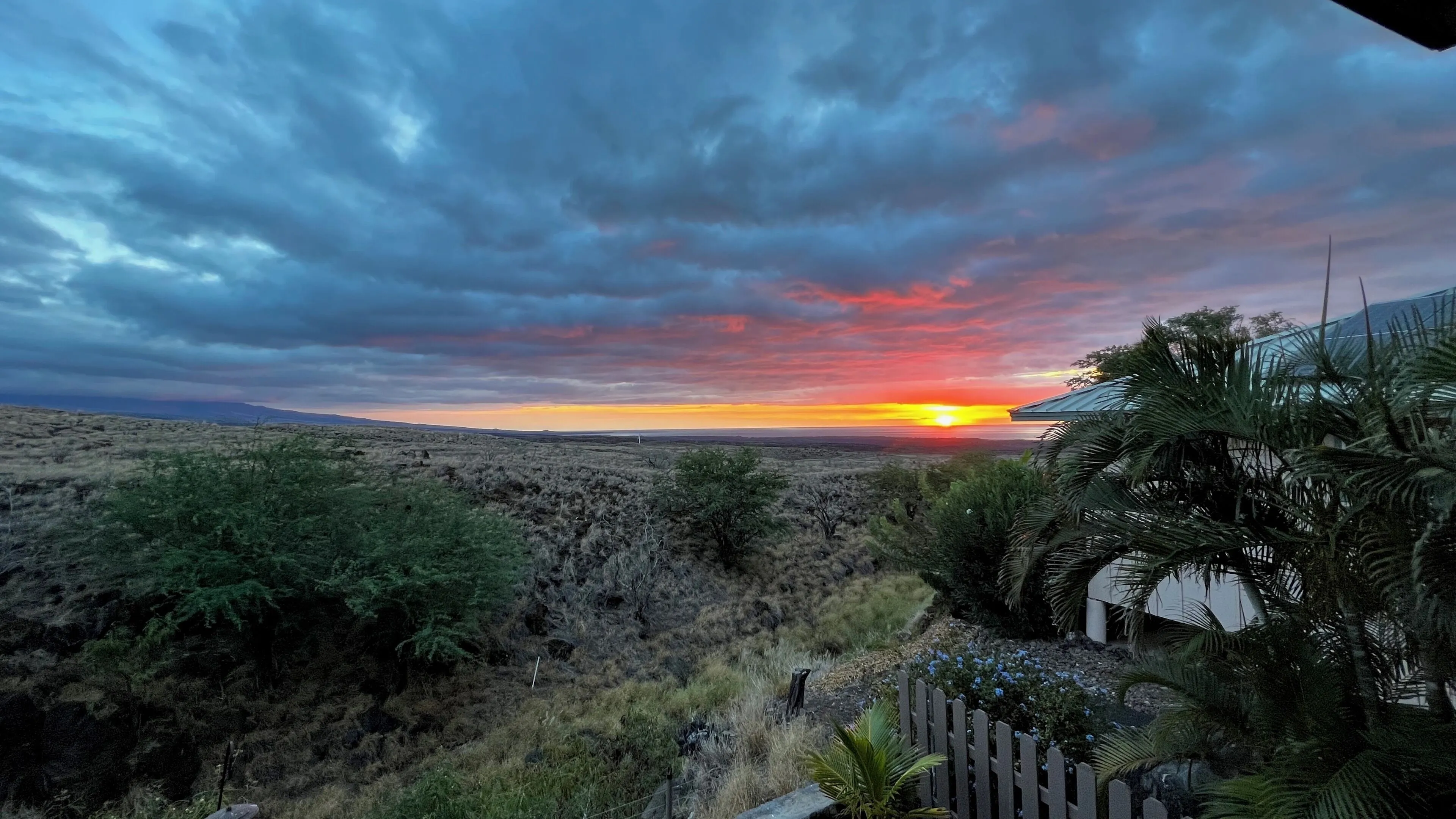
Thinking about retiring to Hawaii? Here's why a month-long stay on the Big Island is the smartest first step — pace, healthcare, real costs, and what a week can never teach you.
Every year we welcome guests who arrive with the same quiet question: could we actually live here? They've vacationed in Hawaii for decades, and now retirement is close enough to touch. Our honest advice is always the same — don't buy anything, don't ship anything, don't decide anything. Rent a real home for a month first. A week in a resort tells you what Hawaii is like on vacation. A month in a residential village tells you what Hawaii is like as a life.
The first week of a long stay, most guests still move at mainland speed. By week two, something shifts. You learn which morning the community market sets up, which neighbors walk their dogs at sunset, how early the golfers tee off. Waikoloa Village is a working residential community — teachers, retirees, hotel staff, families — not a resort bubble. If village life at this pace suits you, that's real information. If you find yourself restless, that's real information too, and far cheaper to learn as a renter than as an owner.
This is the question would-be retirees should research hardest, so here are the facts. The Big Island has three main hospitals: Queen's North Hawaii Community Hospital in Waimea (part of The Queen's Health Systems, and only about 20–25 minutes from Waikoloa Village), Kona Community Hospital in Kealakekua on the south side of Kona, and Hilo Medical Center on the east side. There are physician practices and urgent-care clinics in Waimea and Kailua-Kona as well. Be realistic, though: for certain specialists and complex procedures, island residents sometimes fly to Honolulu. During a month here you can do something a week never allows — actually visit the facilities, meet a physician or two, and ask locals how they manage care. That due diligence alone justifies the trip.
Numbers first, because dreams need budgets:
Run a month on those numbers and you'll know, concretely, whether a Big Island retirement fits your finances rather than guessing from a guidebook.
Weather, for one. The Kohala side is famously dry and sunny, but a month lets you feel the patterns: the afternoon breezes at our 800-foot elevation, the occasional vog day when trade winds shift, the way evenings up here cool off enough that we've never needed more than ceiling fans and open windows. You'll learn distances too — the Big Island is larger than all the other Hawaiian islands combined, and a "quick trip" to Hilo is a genuine day out. You'll learn logistics: where you actually buy groceries (the village has its own KTA grocery store), when the farmers markets run, what a Costco run to Kailua-Kona involves. And you'll learn the intangibles — whether you miss your grandkids more than you expected, whether the 2–6 hour time difference to the mainland complicates your life, whether island quiet feels like peace or isolation. None of that shows up in a week.
Here's the outcome we see most often, and we think it's a wise one: guests decide not to move permanently, but to come back every winter. Snowbirding — a month or a whole season each year — gives you Hawaii's best weather during the mainland's worst, without selling a home you love, leaving your doctors, or moving away from family. Hawaii County requires a 31-night minimum for vacation rentals in residential areas like ours, which happens to align perfectly with the snowbird rhythm. Several of our returning guests treat our home as their winter home, and we hold their dates year after year.
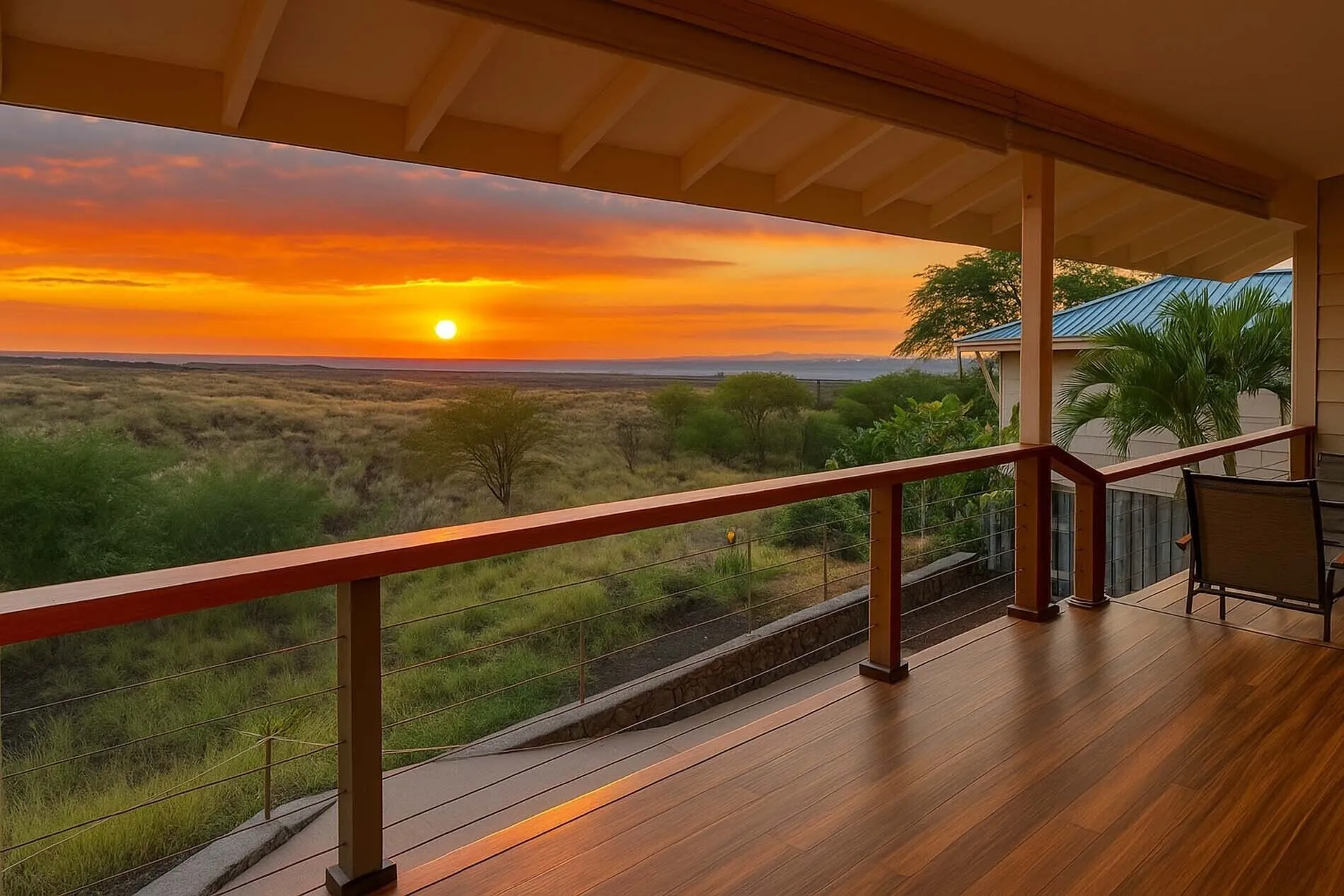
Our home, Hale Akaʻula, was made for exactly this kind of trial run: three bedrooms, two and a half baths, a gourmet kitchen for real everyday cooking, quiet ocean-view workspaces, full-size laundry, and a west-facing lanai where you can watch the sun drop into the Pacific every evening while you talk it all over. We rent it as a whole home, by the month, and because you book directly with us there are no platform fees. Take a look at our photo gallery, review monthly rates, and when you're ready to schedule your trial run, check availability on our reservations page or send us a note — we're happy to answer the questions only residents can.