Why the Kohala Coast is one of the sunniest corners of Hawaii, what each month actually feels like, and how our 800-foot elevation keeps evenings comfortable.
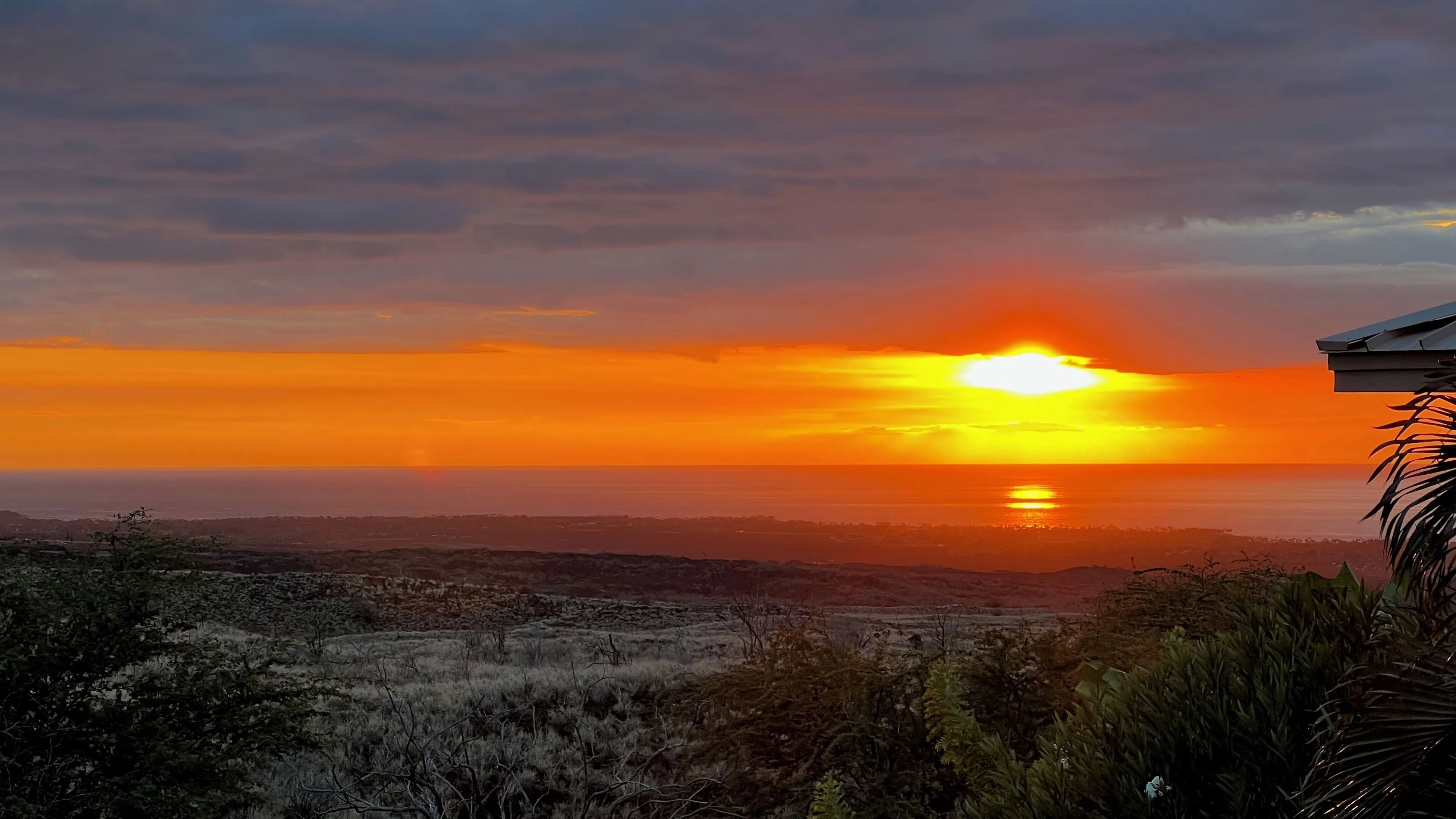
The question we get most often from guests planning a month at Hale Akaʻula is some version of: what will the weather actually be like? The short answer is: sunnier than you think, all year long. The longer answer is one of our favorite things about living on this side of Hawaiʻi Island, so here it is, month by month.
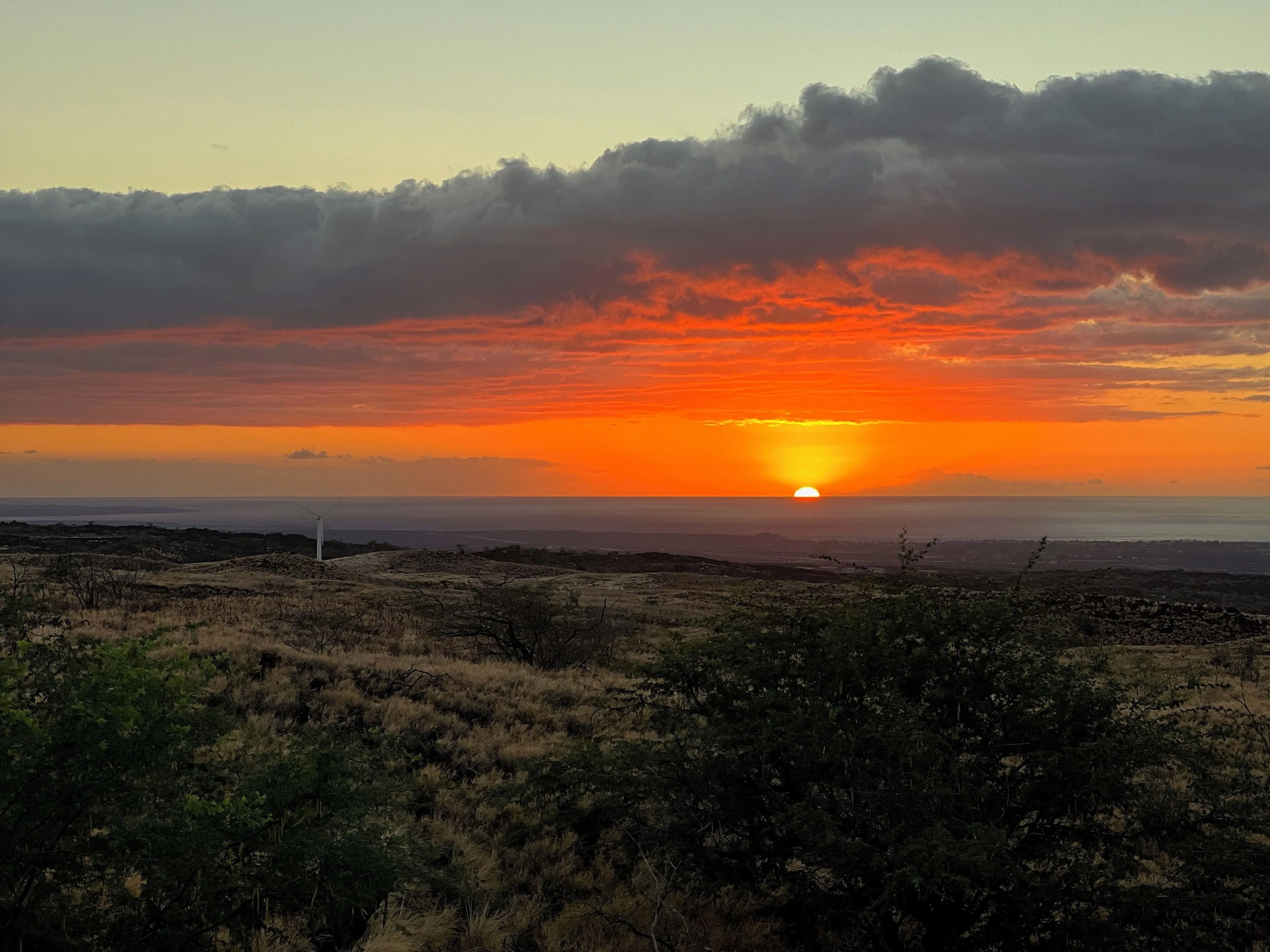
Trade winds blow from the northeast most of the year, pushing moist ocean air into the slopes of Mauna Kea, Mauna Loa, and the Kohala mountains. The windward side — Hilo and Hāmākua — catches that rain and turns lush and green. By the time the air spills over to our leeward side, it has wrung itself out. The result: the South Kohala coast is one of the driest, sunniest places in the entire state. Rain here tends to come in brief passing showers, often overnight, and blue-sky days are the default in every season.
Kīlauea, far to our southeast, releases volcanic gases that can form a haze called vog. On normal trade-wind days, that haze gets pushed away to the southwest, and it tends to affect the Kona coast more than Kohala. When the trades stall and lighter kona winds take over — more common in winter — vog can drift across leeward areas and soften the horizon for a day or two, then clear when the trades return. Most guests barely notice it; those who are sensitive to air quality can simply take it easier on hazier days. How much vog there is at all depends on what the volcano is doing that month.
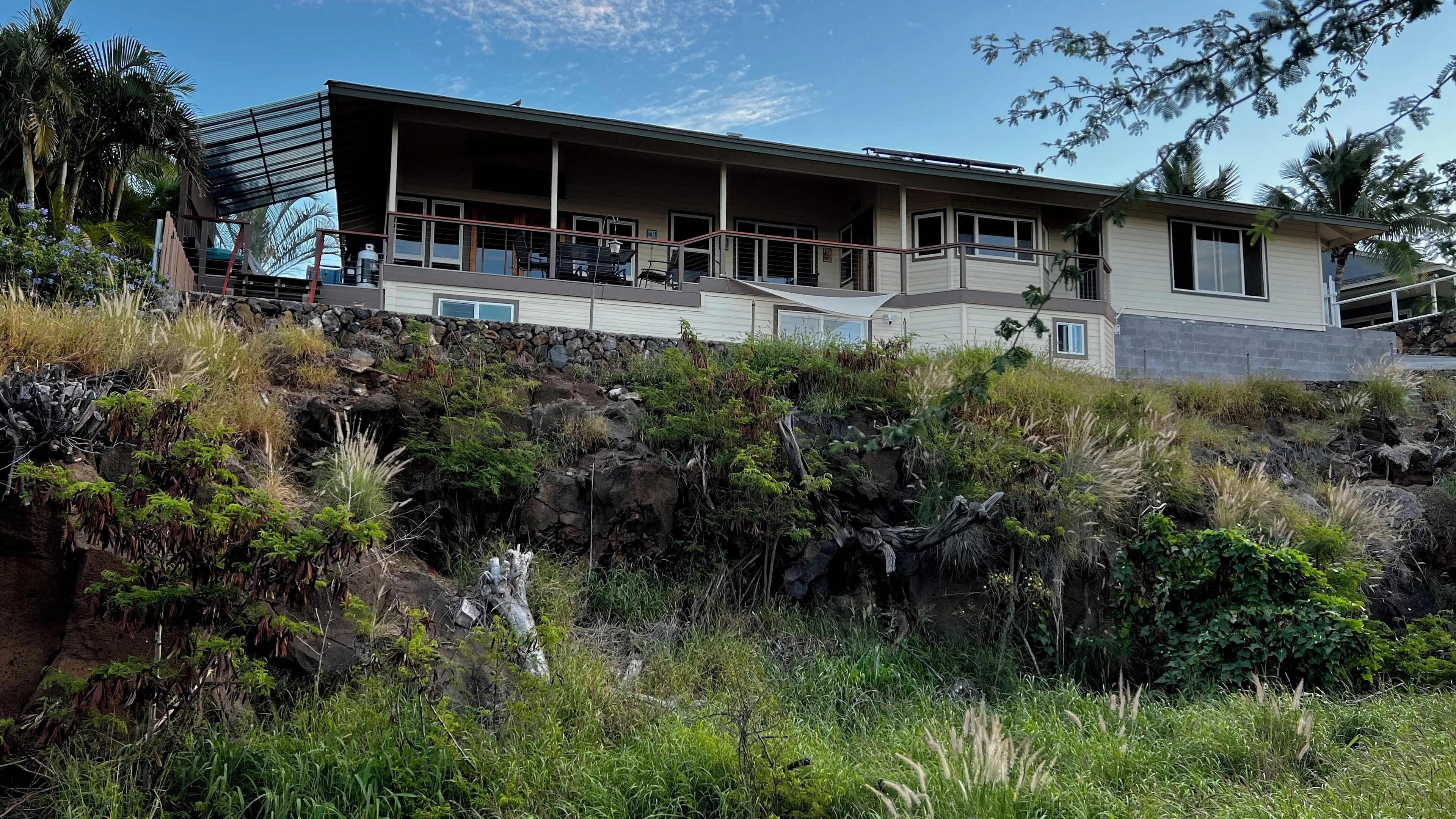
Hale Akaʻula sits in Waikoloa Village at about 800 feet of elevation, a ten-minute drive up from the resort coast. That modest rise matters more than you would guess: we get the same sunshine, but evenings run noticeably cooler than the beach, with a reliable breeze moving through. Ceiling fans and open windows are genuinely all you need for comfortable sleeping here, year-round — one of the perks of the elevation that surprises guests who expected to swelter.
If whales are the dream, come January through March. For the warmest ocean and calmest snorkeling, July through October. For value and quiet, May or September through early December — our shoulder-season months. The honest truth is that there is no bad month on this coast, which is exactly why we fell for it.
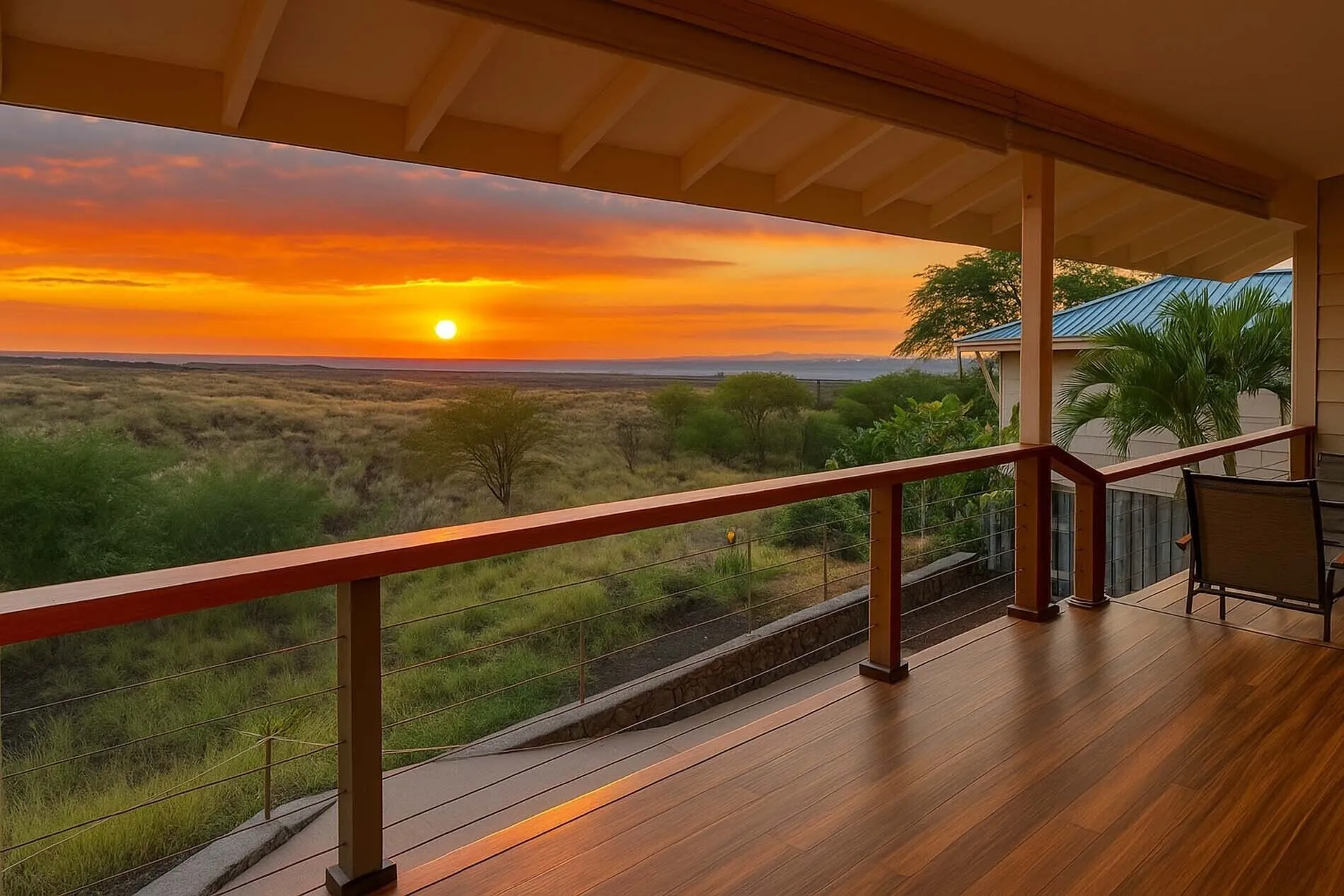
Weather like this rewards slow travel — enough weeks to catch the whales and the calm days, the big-surf spectacles and the glassy mornings. Hale Akaʻula is a whole 3-bedroom home (sleeps 8) with a west-facing covered lanai for every one of those sunsets, offered monthly with a 31-night minimum. See current rates on our pricing page, request dates through reservations, or contact us and we will tell you honestly what your month usually feels like.