Waikoloa Beach Resort and Waikoloa Village are six miles and a world apart — here's the difference in climate, cost, and character, and who should stay where.
It's the most common mix-up on the Kohala Coast, and we watch it happen every year: guests book "Waikoloa" expecting one thing and find another. Even the hotel names conspire — the Hilton Waikoloa Village is actually down at the beach resort. So as residents of one Waikoloa and neighbors of the other, let us untangle it. There are two Waikoloas, about six miles and 800 vertical feet apart, and they are genuinely different places.
Waikoloa Beach Resort is the master-planned resort area right on the ocean along Highway 19. This is the Waikoloa of the travel brochures: the Hilton Waikoloa Village and the Waikoloa Beach Marriott, condo complexes, two resort golf courses, and the twin shopping centers — Kings' Shops and Queens' MarketPlace — with restaurants, boutiques, a food court, and a Tuesday-morning farmers market. Its beach is ʻAnaehoʻomalu Bay ("A-Bay"), a lovely palm-fringed crescent with calm water and front-row sunsets. It's polished, convenient, and built for vacations. It is also priced like it, and at sea level on the sunny leeward coast, it's warm day and night.
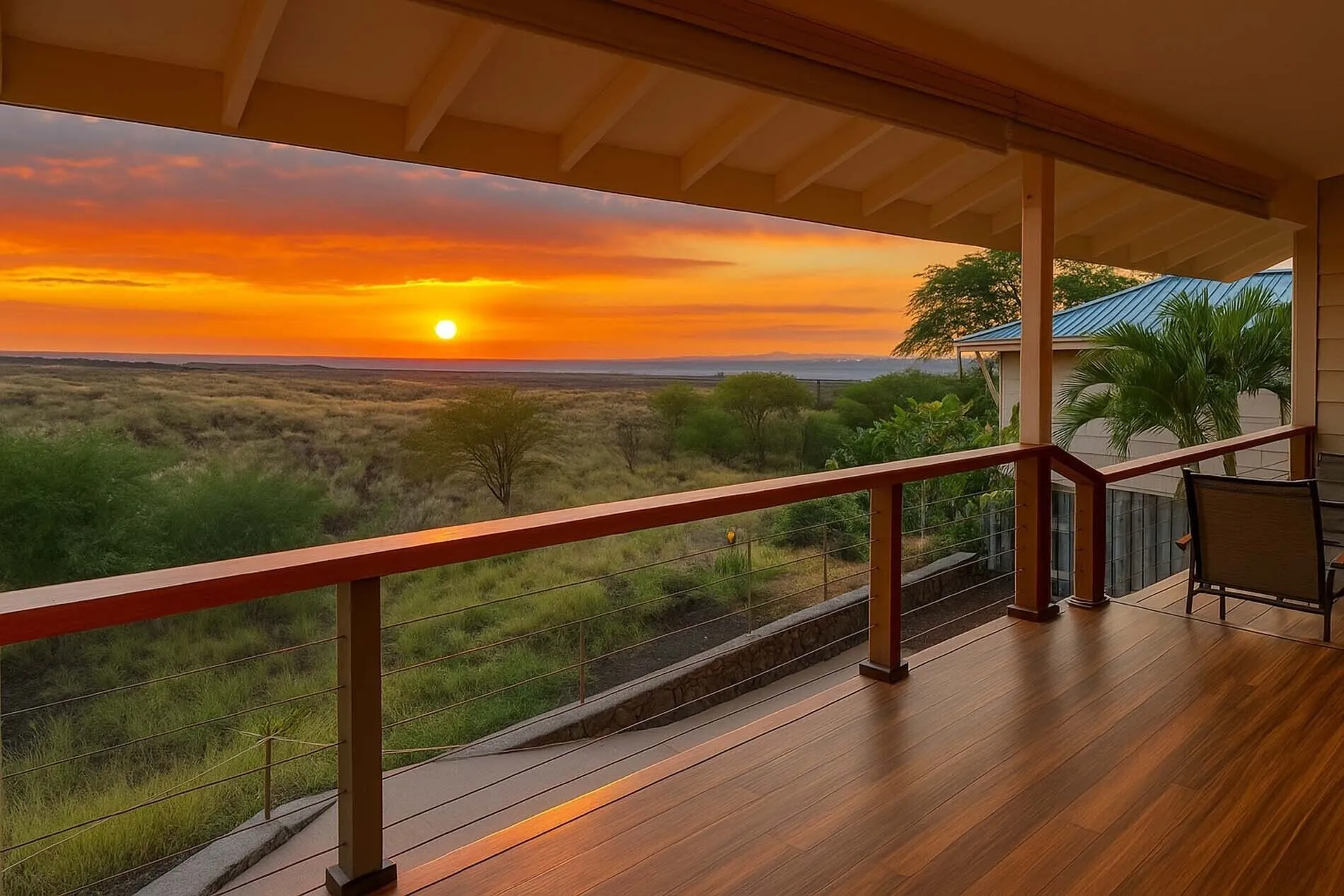
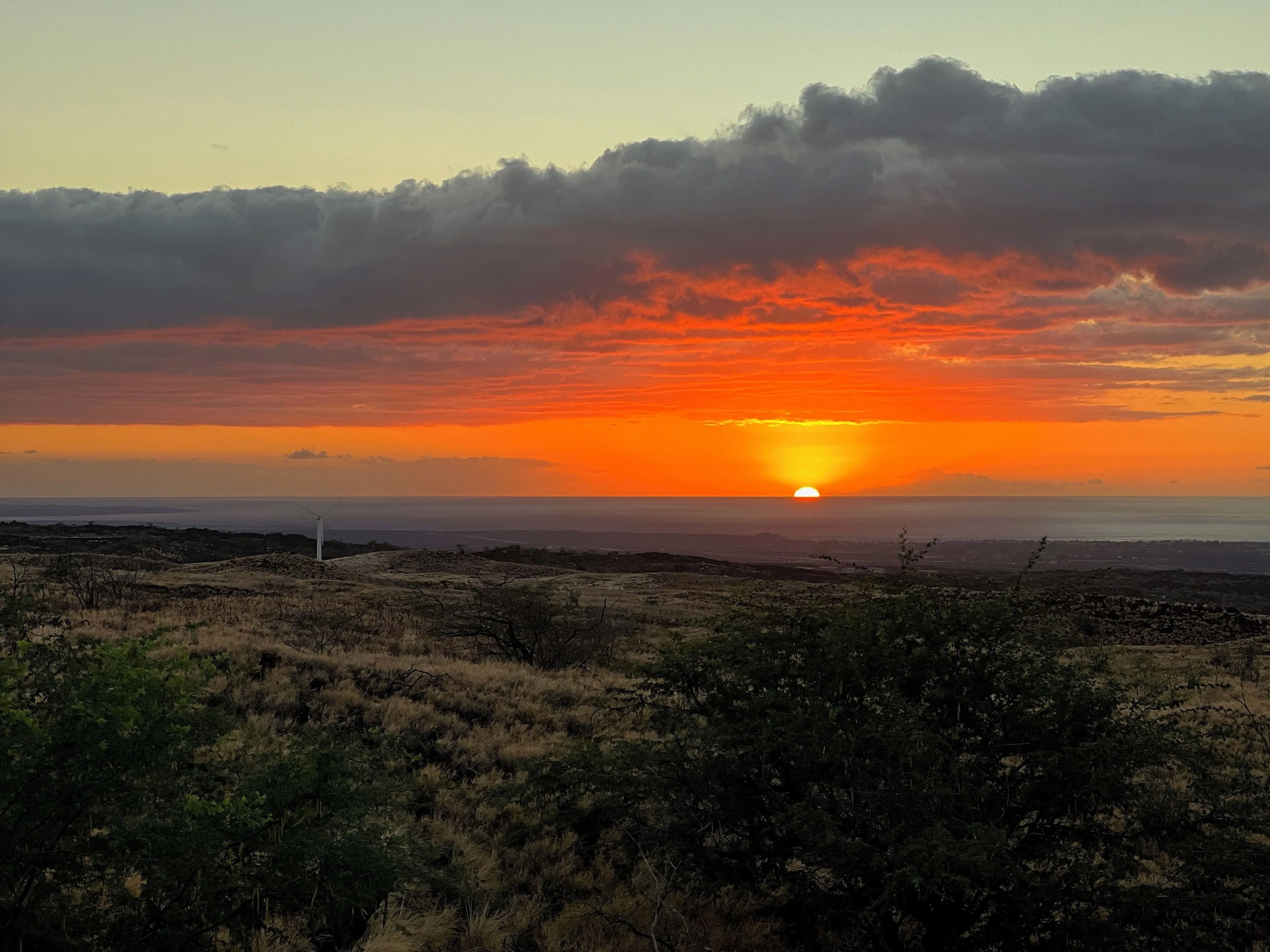
Drive six miles up Waikoloa Road and you arrive somewhere else entirely: Waikoloa Village, a residential community of several thousand people at roughly 800 feet elevation on the slopes above the coast. This is where a large share of the people who work on the Kohala Coast actually live. The village has its own full grocery store (KTA Super Stores, the island's family-run chain), a golf course — the Waikoloa Village Golf Club, which our guests can play via guest pass — a community swimming pool, schools, churches, local restaurants, and a community market at the Waikoloa Stables on the first Saturday of each month. There are no hotels up here. Evenings mean neighbors walking dogs and some of the best sunset views on the island, looking down the slope and out over the Pacific.
Those 800 feet matter more than you'd guess. The coast is sunny and hot essentially year-round. The village gets the same abundant sunshine — this is the dry, leeward side — but with steady breezes and evenings that genuinely cool down. It's the reason homes up here, ours included, are designed for open windows and ceiling fans rather than sealed-up air conditioning. Guests from the mainland are routinely surprised to find themselves reaching for a light layer on the lanai in January. If you've only experienced coastal-resort Hawaii, village evenings are a revelation.
Oceanfront resort real estate commands oceanfront resort prices, whether you're booking a hotel room or a condo — and short resort stays also stack on nightly resort fees and parking charges. The village runs on a different economy. As a data point: our 3-bedroom home in the village, which sleeps up to 8, rents from $6,900/month in shoulder season and $8,200/month in winter (plus Hawaii's ~18–19% taxes) — for a whole private house. Spread over a month, that's a nightly cost no beachfront resort can approach, with several times the space.
The two Waikoloas are about a 10–15 minute drive apart, so village guests use the resort freely: A-Bay for a swim, Queens' MarketPlace for dinner, the Tuesday farmers market at Kings' Shops. From the village it's also roughly 25 minutes to Hāpuna Beach, 20–25 minutes to Waimea's shops and Saturday markets, and about 35 minutes to Kona International Airport. You give up the walk-to-the-beach; you gain the whole coast.
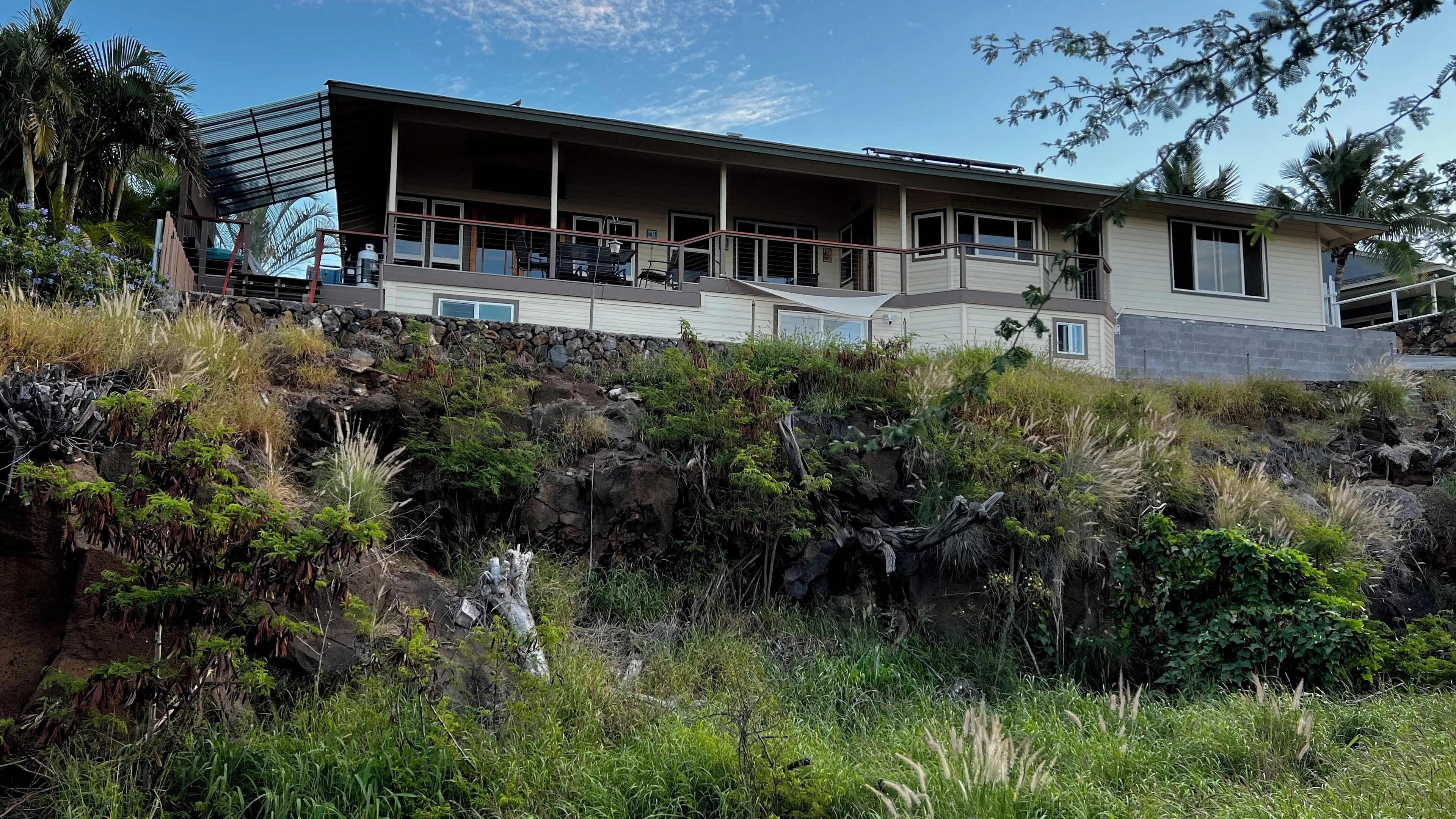
Hale Akaʻula is our 3-bedroom, 2.5-bath home in Waikoloa Village — 2,236 square feet, a gourmet kitchen, fast WiFi with ocean-view workspaces, included beach gear for the coast below, and a west-facing covered lanai for the nightly sunset show. We rent it as a whole home, by the month, booked directly with no platform fees. If village life sounds like your kind of Hawaii, look through the gallery, compare monthly rates to a month at the resorts, and check dates on our reservations page. Come stay in the Waikoloa where people actually live — the beach will still be there, ten minutes down the hill.